
The Sliding Door No One Could See Through — Window Cleaning in Cockburn
Location: Cockburn
There’s a particular type of glass contamination that builds up on sliding doors faster than anywhere else on a property. It’s the combination of hand contact, foot traffic nearby, cooking vapours drifting out through an open door, and the constant cycle of condensation that collects at the base of the frame. Add in the fine airborne dust that settles across Perth’s southern suburbs through the warmer months, and what starts as a slightly smudged pane of glass becomes something that barely qualifies as transparent.
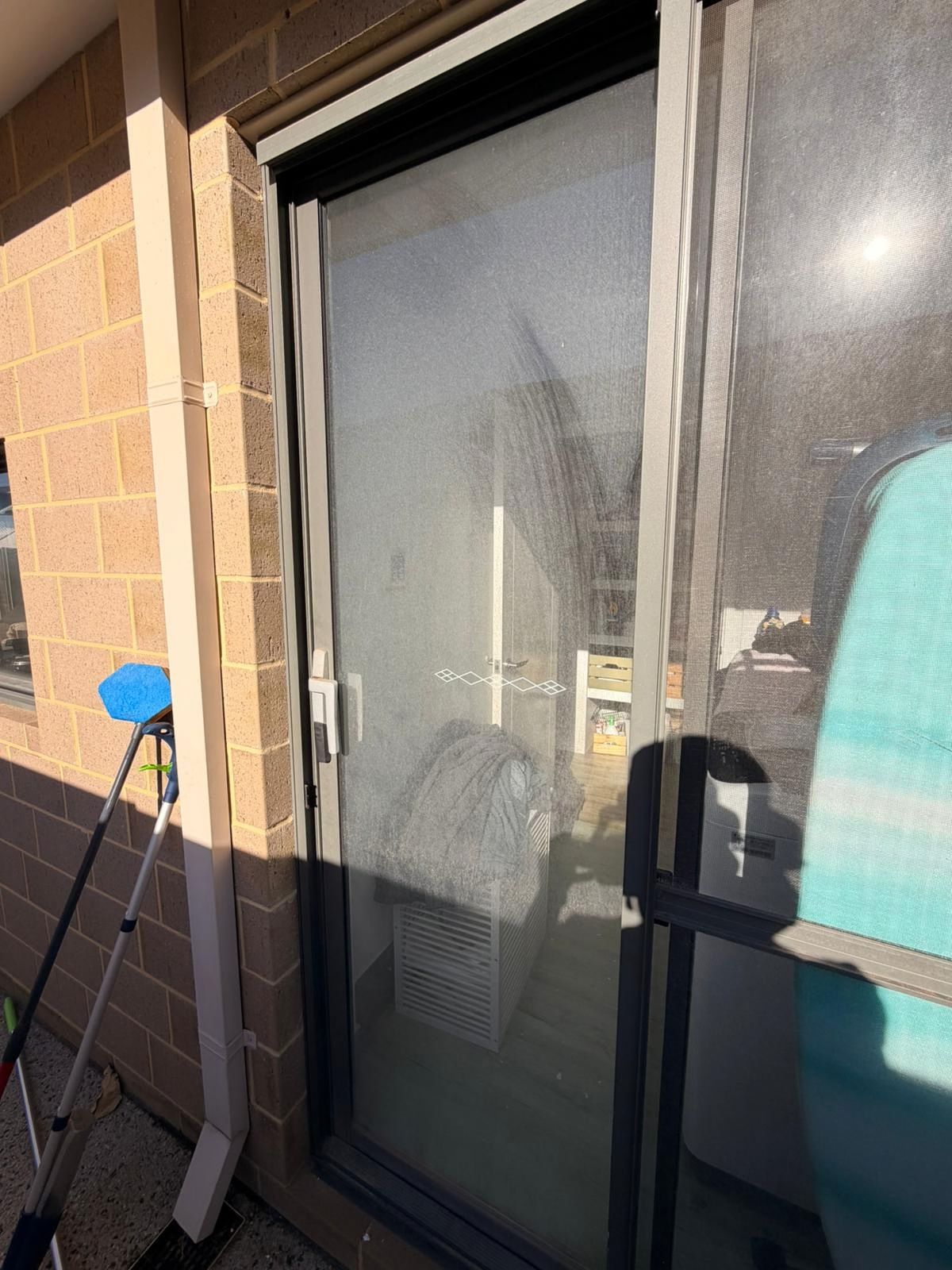
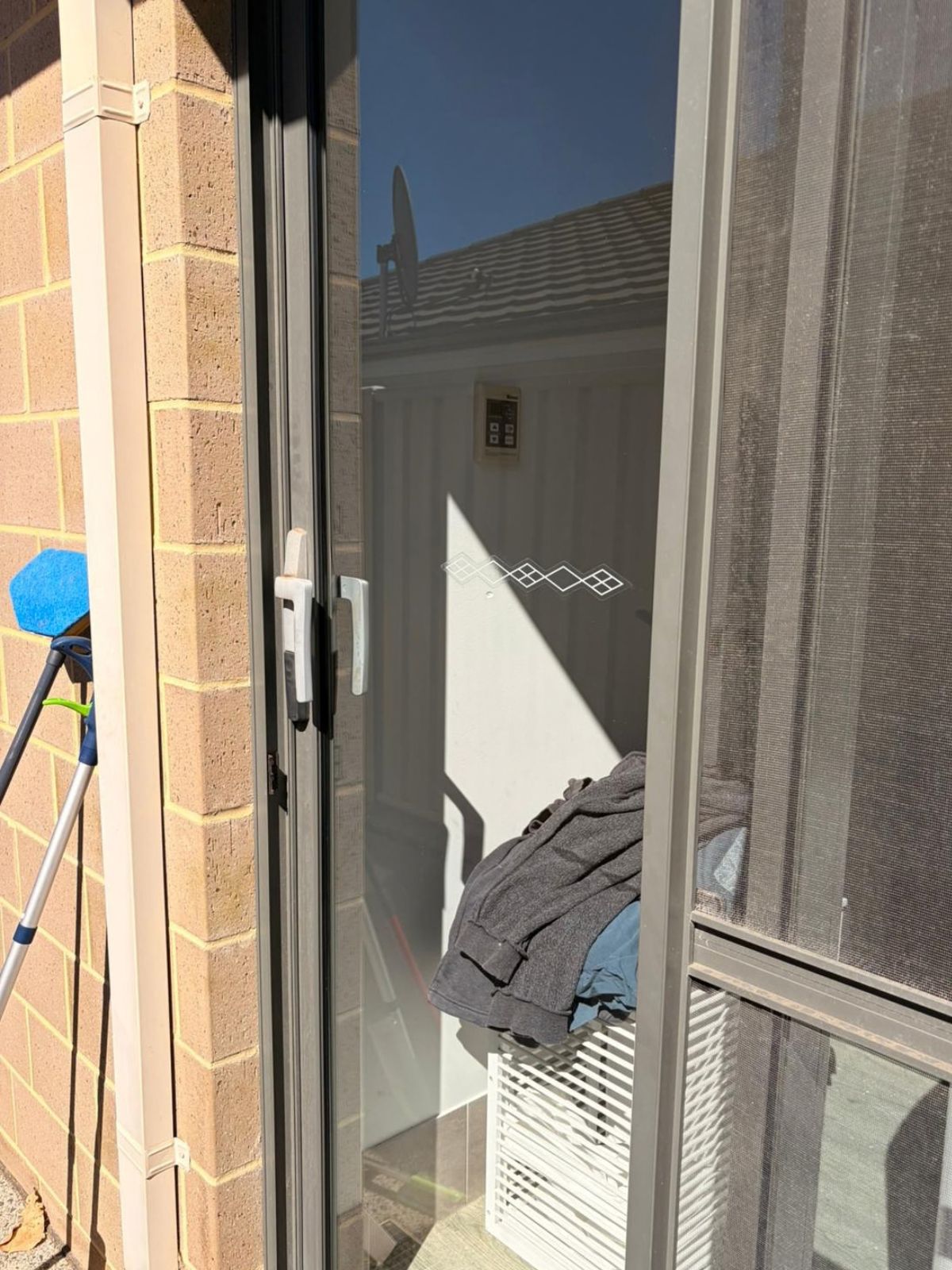
That’s exactly what we were looking at when we arrived at a Cockburn home recently — a sliding glass door and adjacent side panel so heavily contaminated that the glass had taken on an almost opaque, milky appearance. The before photo tells the story clearly. The after photo tells the rest of it.
What the Glass Actually Looked Like Before
The property had a single sliding door opening onto what appeared to be an alfresco or laundry access area, flanked by a security screen panel on one side. The door frame was dark-coloured aluminium — the kind that’s common in newer Cockburn builds — and the glass itself was a full-length pane running from near floor height to the top of the frame.
Looking at the before photo, the issues visible on the glass included:
Heavy smearing across the full surface. This isn’t just surface dust — it’s the kind of layered contamination that comes from repeated contact with greasy or oily residue. The classic culprits are sunscreen, cooking oils carried on hands, and the natural oils from repeated palm and fingerprint contact near the door handle area. Over time these don’t just sit on the surface — they bond to it, and ordinary wiping spreads the contamination rather than removing it.
Mineral haze across the mid and lower sections. The lower third of the door showed the characteristic milky film that comes from water evaporating and leaving dissolved mineral deposits behind. In Cockburn, this is frequently driven by bore water used in reticulation systems — bore water in this part of Perth carries elevated mineral loads, and overspray onto glass panes produces the same spotted, hazy residue we see across the whole southern corridor.
General atmospheric dust accumulation in the frame tracks. The sliding door track had collected a significant amount of fine dust and debris, which was visible in the before photo along the base of the frame. This matters for more than aesthetics — grit in the tracks causes wear on the door seals and rollers over time, and it gets dragged across the glass surface if the door isn’t cleaned properly before it’s slid open during a clean.
The adjacent flyscreen panel was also carrying a substantial dust load — visible as a darkening across the mesh that significantly reduces airflow and visibility through the screen even when the main door is open.
Why Sliding Doors in Cockburn Build Up Contamination Quickly
Cockburn spans a broad area from the older established suburbs around Munster and Coogee Beach through to the newer estates in the Cockburn Central and Banjup areas. Across all of these, sliding glass doors face a consistent set of challenges:
Proximity to the coast. Even for properties not directly on the waterfront, Cockburn’s location means onshore winds carry salt aerosols further inland than most residents realise. Salt deposits on glass are particularly stubborn because they’re hydrophilic — they attract moisture and then re-deposit as the moisture evaporates, creating a self-reinforcing cycle of contamination.
Bore water reticulation. A high proportion of Cockburn homes run reticulation systems drawing from local bores rather than scheme water. Bore water in this area is notably hard, with elevated iron and calcium content. Overspray on glass produces the orange-tinted mineral spotting and general haze that we see repeatedly on properties throughout the suburb.
High-use sliding doors. Unlike standard windows, sliding doors are touched and handled daily, often by people coming in from outside with sunscreen, garden residue, or food on their hands. Each contact point adds to the contamination layer.
Similar patterns of glass contamination show up across nearby suburbs — if you’re in Kwinana, Success, Cooloongup, or Hammond Park, the same bore water and coastal air combination produces the same results on glass.
How We Cleaned It
Sliding doors require a slightly different approach to standard windows because of the frame configuration and the fact that grit in the tracks can cause problems during the clean if it’s not addressed first.
Track and frame clean first. Before any water touches the glass, we cleared the sliding track and frame of accumulated dust and debris. A dirty track is not just a cosmetic issue — it’s also a source of abrasive contamination that can be dragged across the glass during cleaning.
Pre-treatment for mineral and grease contamination. The combination of mineral haze and grease-based smearing on this door meant a standard soap-and-squeegee approach wouldn’t fully cut through on the first pass. We pre-treated the glass surface to break down the bonded contamination before the main wash, which allows it to be removed cleanly rather than spread around.
Full surface wash and squeegee. Working top to bottom in overlapping S-pattern strokes, the glass was washed and squeegeed methodically. This technique ensures dirty water from the top of the pane doesn’t run back over sections that have already been cleaned — the single most common cause of streaking on large glass panels.
Edge and seal detailing. The junction between the glass and the frame is where most of the residual smearing lives after a standard clean. This area is done by hand with a chamois, which is what produces the fully clean edge-to-edge result visible in the after photo.
Flyscreen removal and separate clean. The adjacent screen panel was removed, cleaned separately, and reinstalled. This step matters — a dusty screen pushed against freshly cleaned glass will transfer contamination back to the surface the first time wind moves it. Flyscreen cleaning is included as standard in our window cleaning service, not charged as an extra.
The After: What a Clean Sliding Door Actually Looks Like
The after photo shows the same door following the clean. The transformation is significant enough that it’s genuinely hard to believe it’s the same pane of glass.
Where the surface had been milky, smeared, and visually impenetrable, it’s now fully transparent. The reflection in the glass is sharp — the neighbouring roofline, the blue sky, and the surrounding detail are all clearly visible. The frame looks cleaner. The whole doorway reads as a different fixture.
From inside the property, the difference is even more noticeable. A heavily contaminated sliding door doesn’t just look bad from outside — it reduces the amount of natural light entering the room behind it, gives the interior a darker and more closed-in feel, and makes the view outward feel dull and flat. Clean glass lets the full light through and opens up the connection between inside and outside that well-designed sliding doors are meant to create.
A Note on Door Glass vs. Window Glass
Sliding door glass tends to require more intensive cleaning than standard windows for a few reasons worth knowing about.
The sheer volume of daily hand contact means grease-based contamination builds up faster on door glass than on any other surface on the property. Standard window glass accumulates mostly airborne contamination — dust, pollen, mineral deposits from rain. Door glass accumulates all of that plus the direct contact residue, which is an entirely different category of contamination that requires different treatment.
This is also why wiping a sliding door with a household glass cleaner rarely produces satisfying results. Domestic glass cleaners are formulated for light surface contamination — they’re not designed to cut through the layered combination of mineral deposits, bonded grease, and atmospheric grime that builds up on a high-contact external door over a period of months.
Professional cleaning addresses all of those contamination types in sequence, which is what produces the result in the after photo rather than just a slightly less-dirty version of the before.
Also Serving Cockburn for Solar Panel Cleaning
If your Cockburn property has solar panels, it’s worth knowing that we cover those too. We’ve detailed the specific issues affecting solar output in this area in our post on solar panel cleaning in Cockburn — dust, bore water overspray, and coastal airborne deposits are the main culprits, and the output losses in WA conditions are measurable. Our solar panel cleaning service uses deionised water to leave panels completely residue-free.
Combining a window clean with a solar panel clean in a single visit keeps things efficient and reduces cost — worth asking about when you get a quote.
Maintenance Scheduling: Getting Ahead of the Buildup
One question we get regularly from Cockburn homeowners is how often glass at this contamination level needs professional attention. The answer depends on the property, but for sliding doors in particular — given the contact and bore water exposure — we’d typically recommend a professional clean every six to twelve months to stay ahead of the kind of heavy buildup visible in these before photos.
A first clean after a long gap takes more time and effort. A maintenance clean on glass that hasn’t had time to fully re-contaminate is quicker, less intensive, and generally less expensive per visit. Our broader guide on exterior maintenance scheduling for WA homeowners covers this in more detail if you’re planning ahead for the year.
Serving Cockburn and the Surrounding Area
We cover Cockburn as part of our regular run through Perth’s southern suburbs. Nearby areas we service include Kwinana, Hammond Park, Success, Cooloongup, Baldivis, and Casuarina.
Exterior window cleaning starts from $99, and we’re happy to combine it with solar panel cleaning, pressure washing, or gutter cleaning in a single visit.
Book a Window Clean in Cockburn
Ready to get your glass looking like the after photo? Visit our Cockburn service page for more information or to request a quote.
We service Cockburn and 30+ suburbs across Perth’s southern corridor.